What is narcolepsy?
Narcolepsy is a 24/7 condition
Narcolepsy is a 24/7
condition
Narcolepsy isn’t only about feeling sleepy during the day. It’s a chronic neurological condition that affects the brain around the clock.
Narcolepsy makes it difficult for your brain to control when you are awake and when you are asleep. This can cause problems throughout your day and night.
Sleep may look different for people with narcolepsy
During a 24-hour day, people have periods of sleep and periods of wakefulness. These periods are supposed to be consolidated—meaning periods of sleep are all supposed to happen at one time. Consolidating wakefulness is important to maintain alertness during the day.
For people with narcolepsy, their total sleep time may be the same as someone without narcolepsy, yet they often have less deep, restorative sleep and don't feel refreshed in the morning. This happens because the brain is unable to properly control wakefulness and sleep.
SLEEP CONSOLIDATION
Graphics are for illustrative purpose only.
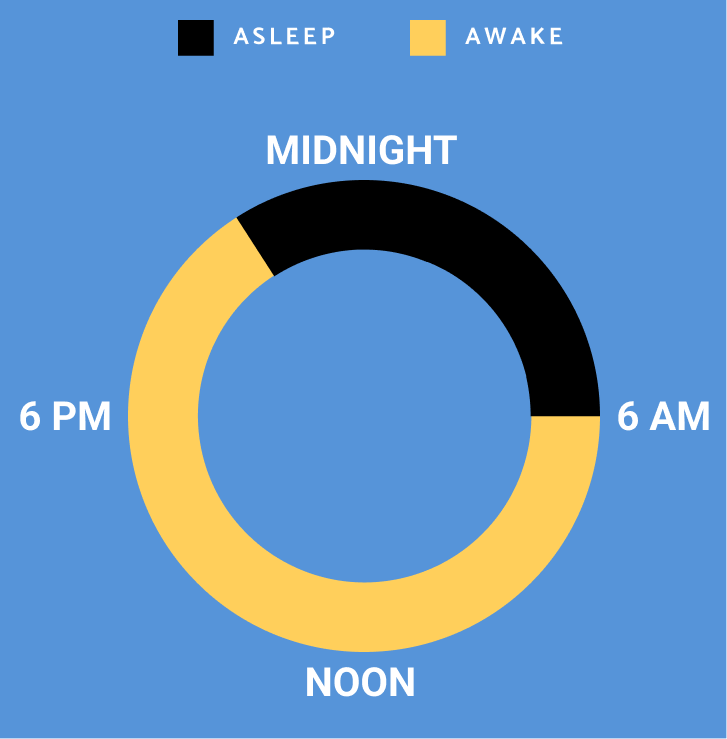
*Asleep, or a REM (rapid eye movement) intrusion, which could include symptoms such as cataplexy or sleep paralysis.
Daytime symptoms of narcolepsy include more than just sleepiness
Excessive daytime sleepiness (EDS) is a hallmark symptom of narcolepsy—it’s the feeling of an overwhelming need to sleep, regardless of how much sleep you got the night before. Everyone with narcolepsy has some level of daytime sleepiness, but the severity can differ between people.
Excessive daytime sleepiness:

Is usually the first symptom people notice
Happens no matter how much you slept the night before

Can occur without warning, even while talking or driving
But there is another common narcolepsy symptom called cataplexy, sudden attacks of muscle weakness. People with narcolepsy are divided into 2 groups: narcolepsy with cataplexy (narcolepsy type 1) or narcolepsy without cataplexy (narcolepsy type 2).
While not everyone with narcolepsy has cataplexy, it can be alarming to those who do. Cataplexy can look different for each person, from a subtle feeling to an intense, overwhelming experience.
Cataplexy might look like:

Jaw sagging or head drooping

Knees getting weak or buckling

Full-body muscle weakness
Cataplexy episodes are often triggered by laughter or strong emotions, such as surprise, anger, or fear. They usually last for a few seconds or minutes. Not all narcolepsy treatments address cataplexy, so if you suspect you have cataplexy, let your healthcare provider know.
Other possible narcolepsy symptoms:

Disturbed nocturnal sleep

Brain fog

Hallucinations
Sleep paralysis
These daytime and nighttime symptoms of narcolepsy can have a significant impact on day-to-day life.