Resource Kit and Tips
Your Narcolepsy Resource Kit
Your Narcolepsy Resource Kit
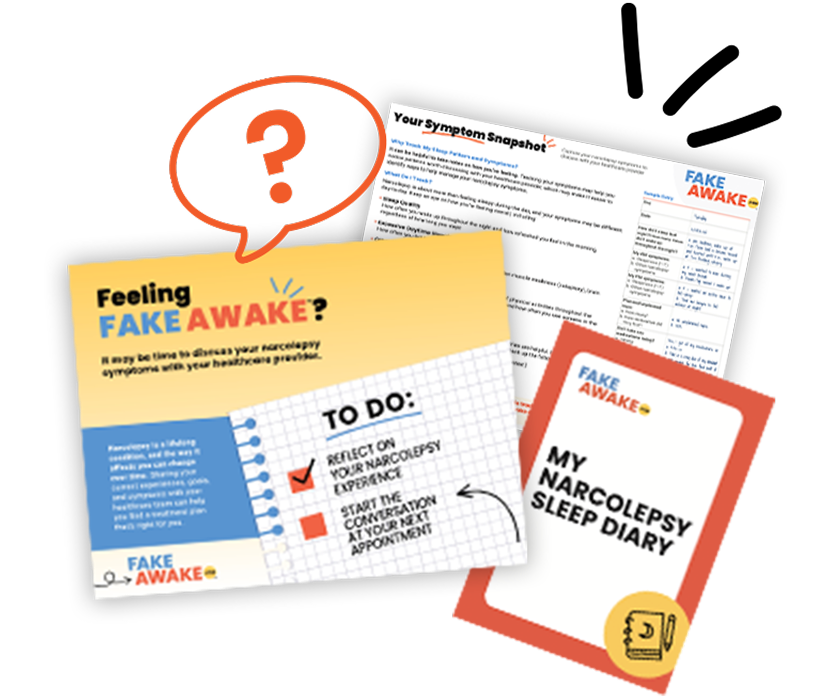
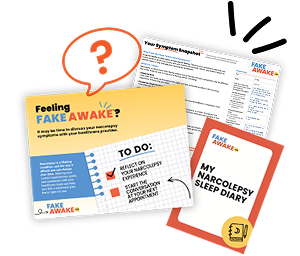
In the digital kit, you’ll find tools to help you reflect on the impact of your narcolepsy symptoms and prepare for conversations with your healthcare team.
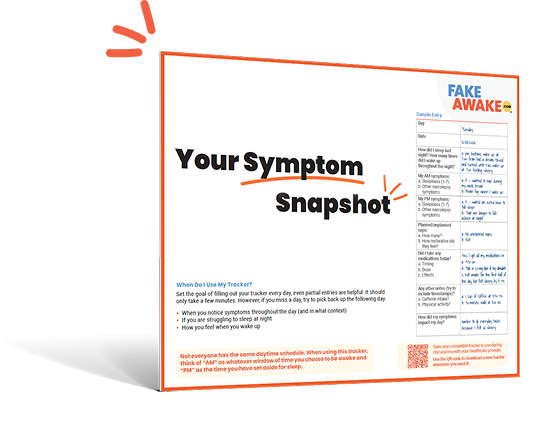
See how narcolepsy is impacting you with this downloadable Symptom Tracker
Tracking your symptoms can help you notice patterns. And that can help you and your healthcare provider find the best treatment plan for your lifestyle.
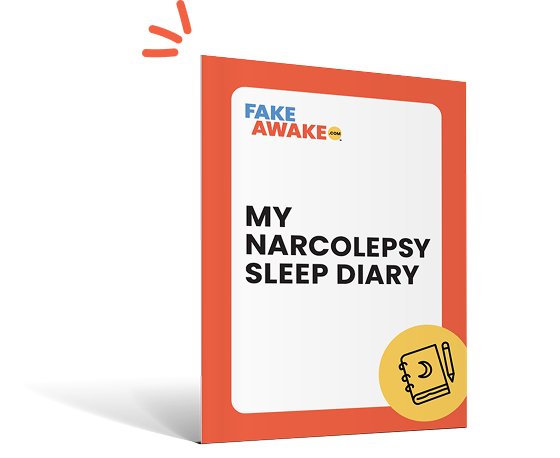
Track your sleep by hand with a physical copy of the Sleep Diary
Click below to have a free physical copy of the Sleep Diary mailed to you. It’s ideal if you want something to bring with you to appointments with your healthcare provider.
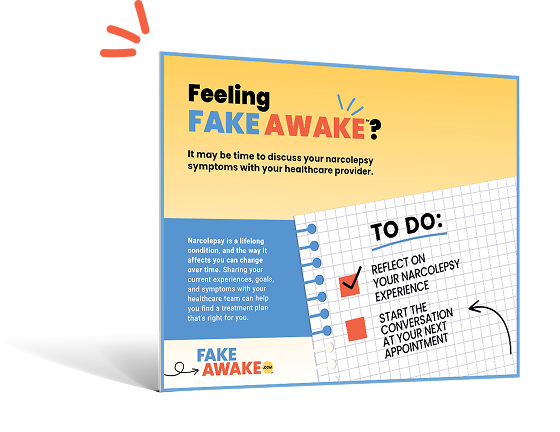
Talk with your healthcare team about your narcolepsy experience
It’s important to discuss all of your narcolepsy symptoms, goals, and treatment experiences with your healthcare team. This Doctor Discussion Guide includes prompts for reflection, sample questions to ask, and tips for preparing for your next appointment.
Tips from the narcolepsy community
“Finding community is a powerful antidote for loneliness and isolation, which often come along with living with a condition that can be invisible to others. You can still live a fulfilling life, and it’s helpful to get exposure to others who can light the way to possibilities that might work for you.”
– Katelynn, a real person with narcolepsy
If you struggle with feeling sleepy during the day, you’re not alone. Narcolepsy can affect activities, relationships, and how you feel throughout the day.

When you communicate with the people around you, they can better understand your experiences with narcolepsy.

Click each section below to read about different aspects of life with narcolepsy, as well as tips from other people living with narcolepsy.
Get more out of your appointments by speaking up about your needs:
- Keep track of your symptoms
Showing your healthcare provider your Symptom Tracker can help guide your conversations and treatment decisions. - Come in with a plan
Jot down your questions and concerns ahead of time so nothing gets lost in the moment. - Be open
Let your healthcare provider know what you’re hoping to talk about and what matters most to you. They want to know what's working for you and what isn't.
Looking for tips on how to talk to your healthcare provider? Download the Doctor Discussion Guide.
“Don’t be afraid to raise concerns or questions to your doctor. If you’re not comfortable with what your doctor recommends, voice that. It’s your body and your life.”
– Lisa, a real person living with narcolepsy
Get more out of your appointments by speaking up about your needs:
- Keep track of your symptoms
Showing your healthcare provider your Symptom Tracker can help guide your conversations and treatment decisions. - Come in with a plan
Jot down your questions and concerns ahead of time so nothing gets lost in the moment. - Be open
Let your healthcare provider know what you’re hoping to talk about and what matters most to you. They want to know what's working for you and what isn't.
Looking for tips on how to talk to your healthcare provider? Download the Doctor Discussion Guide.
“Don’t be afraid to raise concerns or questions to your doctor. If you’re not comfortable with what your doctor recommends, voice that. It’s your body and your life.”
– Lisa, a real person living with narcolepsy
Find tips for navigating life when others may not see or understand what you’re going through. Remember:
- You know what’s best for you
Others may not fully understand your experience—and that’s okay. - You get to decide who hears your story
You can set boundaries around sharing your experience in whatever way feels right to you. - Lean on people who do understand
Supportive friends, family, or community members can make a real difference. - You are more than your diagnosis
Your chronic condition is something you live with. It is not who you are.
“I let people know what narcolepsy looks like for me, and how it impacts all areas of my life. It sometimes feels awkward to share, especially with people who are new in my life, but I try to remind myself that I am spreading awareness every time I shed light on my experience.”
– Katelynn, a real person living with narcolepsy
Find tips for navigating life when others may not see or understand what you’re going through. Remember:
- You know what’s best for you
Others may not fully understand your experience—and that’s okay. - You get to decide who hears your story
You can set boundaries around sharing your experience in whatever way feels right to you. - Lean on people who do understand
Supportive friends, family, or community members can make a real difference. - You are more than your diagnosis
Your chronic condition is something you live with. It is not who you are.
“I let people know what narcolepsy looks like for me, and how it impacts all areas of my life. It sometimes feels awkward to share, especially with people who are new in my life, but I try to remind myself that I am spreading awareness every time I shed light on my experience.”
– Katelynn, a real person living with narcolepsy
Opening up about narcolepsy can feel vulnerable, but clear communication can help set expectations and build support.
Be specific rather than general
Concrete asks are often easier for others to understand and act upon.
For example, you might say:
“I need to be able to go home by 7 tonight,” rather than “I need flexibility in the evenings," or
“Can you knock on my door at 9:30 AM to make sure I’m awake?” rather than “I need help with mornings.”
Use “I” statements
This keeps the focus on your experience and can help others feel less defensive.
For example, you might say:
“I feel frustrated when you question why I need a nap,” instead of “You don’t understand me.”
Choose the right moment
Timing and setting can make these talks more productive.
For example, picking a time when you are feeling calm and in a place free of distractions can help you focus on the conversation.
Remember that conversations go both ways
Just as you want to be listened to and understood, take some time to listen to the other person’s perspectives. By affirming each other’s feelings, you create a safe environment for real communication.
“When I was diagnosed, I thought my family would just get it and support me like I needed them to understand. Maybe even say sorry for calling me lazy. Nope. What helped was explaining in a way that clicked. I told my brother imagine staying up for 3 days, then having to go to work. That clicked.”
– Tre, a real person living with narcolepsy
Opening up about narcolepsy can feel vulnerable, but clear communication can help set expectations and build support.
Be specific rather than general
Concrete asks are often easier for others to understand and act upon.For example, you might say:
“I need to be able to go home by 7 tonight,” rather than “I need flexibility in the evenings," or
“Can you knock on my door at 9:30 AM to make sure I’m awake?” rather than “I need help with mornings.”Use “I” statements
This keeps the focus on your experience and can help others feel less defensive.For example, you might say:
“I feel frustrated when you question why I need a nap,” instead of “You don’t understand me.”Choose the right moment
Timing and setting can make these talks more productive.For example, picking a time when you are feeling calm and in a place free of distractions can help you focus on the conversation.
Remember that conversations go both ways
Just as you want to be listened to and understood, take some time to listen to the other person’s perspectives. By affirming each other’s feelings, you create a safe environment for real communication.
“When I was diagnosed, I thought my family would just get it and support me like I needed them to understand. Maybe even say sorry for calling me lazy. Nope. What helped was explaining in a way that clicked. I told my brother imagine staying up for 3 days, then having to go to work. That clicked.”
– Tre, a real person living with narcolepsy
Staying informed can help you navigate school or work with narcolepsy. As you think about your path forward:
- Research your rights
Narcolepsy may be recognized as a disability under the Americans with Disabilities Act (ADA). This may allow for reasonable accommodations, like flexible schedules or rest breaks. - Consider sharing your diagnosis
The ADA only protects you if your school or employer knows about your condition. Providing a brief explanation of what you experience, along with a fact sheet about narcolepsy, such as this one from Harvard Medical School, may be a big help. - Take advantage of any resources available
Schools may have a center for students with disabilities, which can help arrange accommodations. For help with accommodations at work, the Job Accommodation Network has a wealth of information online. Visit the Job Accommodation Network for more information on sleep disorders, including narcolepsy.
Staying informed can help you navigate school or work with narcolepsy. As you think about your path forward:
- Research your rights
Narcolepsy may be recognized as a disability under the Americans with Disabilities Act (ADA). This may allow for reasonable accommodations, like flexible schedules or rest breaks. - Consider sharing your diagnosis
The ADA only protects you if your school or employer knows about your condition. Providing a brief explanation of what you experience, along with a fact sheet about narcolepsy, such as this one from Harvard Medical School, may be a big help. - Take advantage of any resources available
Schools may have a center for students with disabilities, which can help arrange accommodations. For help with accommodations at work, the Job Accommodation Network has a wealth of information online. Visit the Job Accommodation Network for more information on sleep disorders, including narcolepsy.
Managing narcolepsy is a challenge, but building healthy habits into your everyday life can help.
- Plan short, strategic naps
Scheduling naps before important activities can help ensure that you are refreshed and ready to go. - Practice healthy sleep habits
Aim to get to bed and wake up at the same time every day. Keeping your bedroom quiet, dark, and at a cool temperature can also help improve the quality of your sleep. - Be cautious about caffeine
Avoid caffeinated beverages right before going to sleep. Since caffeine can affect the body for several hours, consider limiting your caffeine intake to early in the day. - Consider what you eat and drink
Eat healthy and avoid large, heavy meals late in the day. Alcohol can disrupt sleep, too—it prevents deep, restorative sleep, even if it makes you feel sleepy at first. - Stay active
In addition to benefiting your overall health, exercise during the day can help you feel sleepy at bedtime.
“Narcolepsy and interrupted sleep cycles? That’s my ‘normal.’ But I’ve got a few tricks for getting more solid sleep and waking up feeling more rested. One is keeping my typical sleep schedule on the weekends and even on vacation. With narcolepsy, disrupted sleep-wake cycles can mean a disrupted life. Finding ways to manage narcolepsy symptoms is so important.”
– Cory, a real person living with narcolepsy
Managing narcolepsy is a challenge, but building healthy habits into your everyday life can help.
- Plan short, strategic naps
Scheduling naps before important activities can help ensure that you are refreshed and ready to go. - Practice healthy sleep habits
Aim to get to bed and wake up at the same time every day. Keeping your bedroom quiet, dark, and at a cool temperature can also help improve the quality of your sleep. - Be cautious about caffeine
Avoid caffeinated beverages right before going to sleep. Since caffeine can affect the body for several hours, consider limiting your caffeine intake to early in the day. - Consider what you eat and drink
Eat healthy and avoid large, heavy meals late in the day. Alcohol can disrupt sleep, too—it prevents deep, restorative sleep, even if it makes you feel sleepy at first. - Stay active
In addition to benefiting your overall health, exercise during the day can help you feel sleepy at bedtime.
“Narcolepsy and interrupted sleep cycles? That’s my ‘normal.’ But I’ve got a few tricks for getting more solid sleep and waking up feeling more rested. One is keeping my typical sleep schedule on the weekends and even on vacation. With narcolepsy, disrupted sleep-wake cycles can mean a disrupted life. Finding ways to manage narcolepsy symptoms is so important.”
– Cory, a real person living with narcolepsy